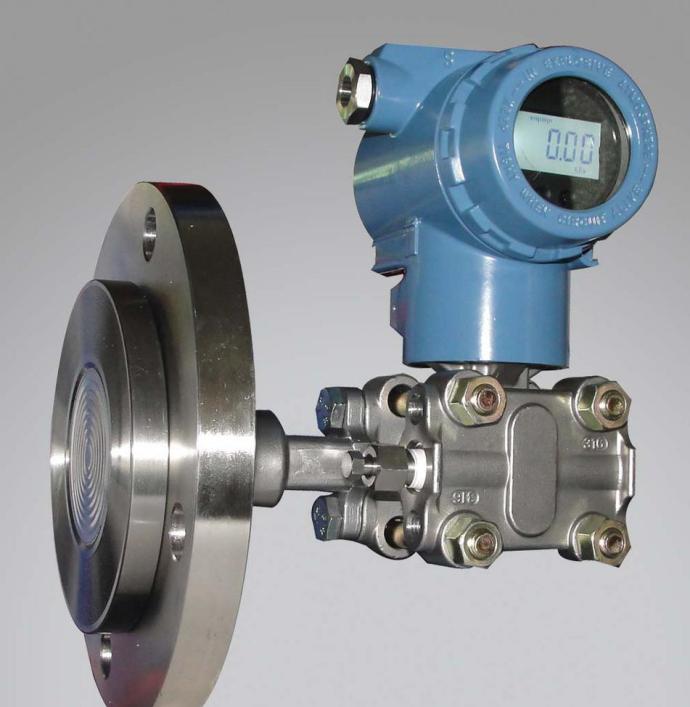
Types of pressure transmitters
Simple self-introduction of pressure transmitter
As a pressure sensor whose output is a standard signal, a pressure transmitter is an instrument that accepts a pressure variable and converts it into a standard output signal in proportion. It can convert the physical pressure parameters of gas, liquid, etc. felt by the load cell sensor into standard electrical signals (such as 4-20mADC, etc.) to provide secondary instruments such as indicating alarms, recorders, regulators, etc. for measurement and indication And process regulation.
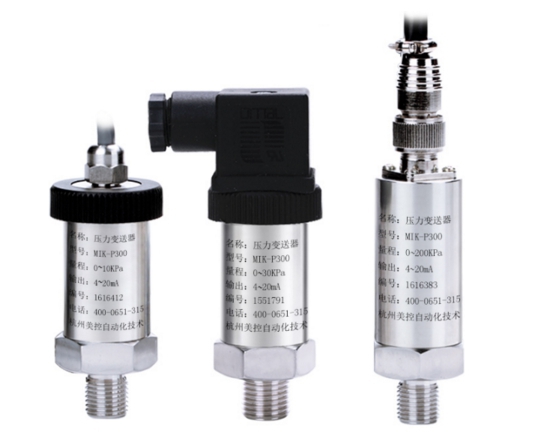
The classification of pressure transmitters
Usually the pressure transmitters we talk about are divided according to the principle:
Capacitive pressure transmitters, resistive pressure transmitters, inductive pressure transmitters, semiconductor pressure transmitters, and piezoelectric pressure transmitters for high-frequency measurement. Among them, resistive pressure transmitters are the most used. The capacitive pressure transmitter takes Rosemount’s 3051S transmitter as a representative of high-end products.
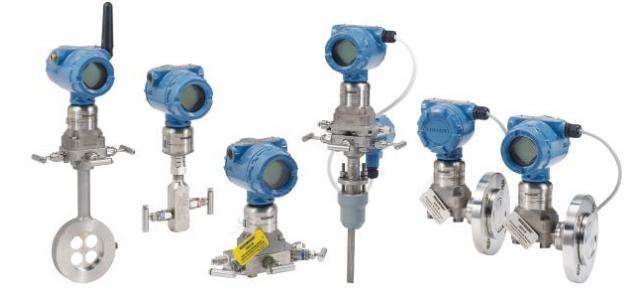
Pressure transmitters can be divided into metal, ceramic, diffused silicon, monocrystalline silicon, sapphire, sputtered film, etc. according to pressure sensitive components.
- Metal pressure transmitter has poor accuracy, but has little temperature influence, and is suitable for areas with a wide temperature range and low accuracy requirements.
- Ceramic pressure sensors have better accuracy, but are more affected by temperature. Ceramics also have the advantage of impact resistance and corrosion resistance, which can be used in the field of response.
- The pressure transmission accuracy of diffused silicon is very high, and the temperature drift is also large, so temperature compensation is generally required before it can be used. Moreover, even after the temperature compensation, the pressure above 125°C cannot be measured. However, at room temperature, the sensitivity coefficient of diffused silicon is 5 times that of ceramics, so it is generally used in the field of high-precision measurement.
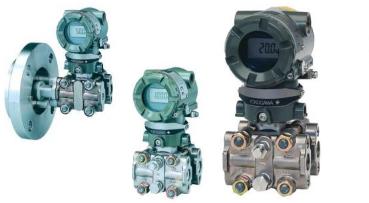
- Single crystal silicon pressure transmitter is the most accurate sensor in industrial practice. It is an upgraded version of diffused silicon. Of course, the price is also upgraded. Currently, Yokogawa of Japan is the representative in the field of monocrystalline silicon pressure.
- The sapphire pressure transmitter is not sensitive to temperature changes, and has good working characteristics even under high temperature conditions; sapphire has extremely strong radiation resistance; no pn drift; it can work normally under the worst working conditions and is reliable High performance, good accuracy, minimal temperature error, and high overall cost performance.
- The sputtering thin film pressure transmitter does not contain any adhesive, and it shows higher long-term stability and reliability than the sticky strain gauge sensor; it is less affected by temperature: when the temperature changes 100 ℃, the zero drift is only 0.5%. Its temperature performance is far superior to the diffusion silicon pressure sensor; in addition, it can directly contact with general corrosive media.
Principles of different types of pressure transmitters
- The principle of capacitive pressure transmitter.
When the pressure directly acts on the surface of the measuring diaphragm, the diaphragm produces a small deformation. The high-precision circuit on the measuring diaphragm transforms this small deformation into a highly linear voltage proportional to the pressure and proportional to the excitation voltage. Signal, and then use a dedicated chip to convert this voltage signal into an industry standard 4-20mA current signal or 1-5V voltage signal.
- The principle of diffused silicon pressure transmitter
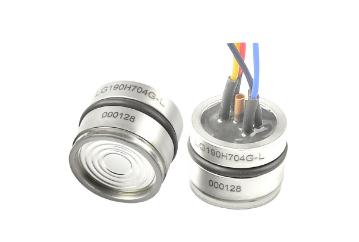
The pressure of the measured medium directly acts on the diaphragm of the sensor (usually a 316L diaphragm), causing the diaphragm to produce a micro displacement proportional to the pressure of the medium, changing the resistance value of the sensor, and detecting it with a Wheatstone circuit This change, and convert and output a standard measurement signal corresponding to this pressure.
- Principle of monocrystalline silicon pressure transmitter
Piezoresistive pressure sensors are constructed using the piezoresistive effect of single crystal silicon. Single crystal silicon wafer is used as the elastic element. When the pressure changes, the single crystal silicon produces strain, so that the strain resistance directly diffused on it produces a change proportional to the measured pressure, and then the corresponding voltage output signal is obtained by the bridge circuit .
- Principle of ceramic pressure transmitter
The pressure directly acts on the front surface of the ceramic diaphragm, causing a slight deformation of the diaphragm. The thick film resistor is printed on the back of the ceramic diaphragm and connected to a Wheatstone bridge (closed bridge) due to the piezoresistive effect of the varistor , The bridge generates a highly linear voltage signal proportional to the pressure and proportional to the excitation voltage. Generally used for pressure measurement of air compressors, more ceramics are used.
- Principle of strain gauge pressure transmitter
The most commonly used strain gauge pressure transmitters are metal resistance strain gauges and semiconductor strain gauges. Metal resistance strain gauge is a kind of sensitive device that converts the strain change on the test piece into an electric signal. There are two kinds of wire strain gauge and metal foil strain gauge. Usually the strain gauge is tightly bonded to the mechanical strain matrix through a special adhesive. When the matrix is subjected to a stress change, the resistance strain gauge also deforms, so that the resistance value of the strain gauge changes, so that The voltage applied to the resistor changes. Strain gauge pressure transmitters are relatively rare on the market.
- Sapphire pressure transmitter
The sapphire pressure transmitter uses the strain resistance working principle, adopts high-precision silicon-sapphire sensitive components, and converts the pressure signal into a standard electrical signal through a dedicated amplifier circuit.
- Sputtering film pressure transmitter
The sputtering pressure sensitive element is manufactured by microelectronics technology, forming a firm and stable Wheatstone bridge on the surface of the elastic stainless steel diaphragm. When the pressure of the measured medium acts on the elastic stainless steel diaphragm, the Wheatstone bridge on the other side produces an electrical output signal proportional to the pressure. Due to its good impact resistance, sputtered films are often used in occasions with frequent pressure impacts, such as hydraulic equipment.
Pressure transmitter selection precautions

- Transmitter pressure range value selection:
First determine the maximum value of the measured pressure in the system. Generally speaking, you need to select a transmitter with a pressure range that is about 1.5 times larger than the maximum value, or let the normal pressure range fall on the pressure transmitter. 1/3~2/3 of the normal range is also a common method.
- What kind of pressure medium:
Viscous liquids and muds will block the pressure ports. Will solvents or corrosive substances destroy the materials in the transmitter that are in direct contact with these media.
The material of the general pressure transmitter that contacts the medium is 316 stainless steel. If the medium is not corrosive to 316 stainless steel, then basically all pressure transmitters are suitable for measuring the pressure of the medium;
If the medium is corrosive to 316 stainless steel, a chemical seal should be used, and indirect measurement should be used. If the capillary tube filled with silicone oil is used to guide pressure, it can prevent the pressure transmitter from corrosion and prolong the life of the pressure transmitter.
- How much accuracy the transmitter needs:
The accuracy is determined by: non-linearity, hysteresis, non-repeatability, temperature, zero offset scale, and temperature. The higher the accuracy, the higher the price. Generally, the accuracy of the diffused silicon pressure transmitter is 0.5 or 0.25, and the capacitive or monocrystalline silicon pressure transmitter has an accuracy of 0.1 or even 0.075.
- Process connection of transmitter:
Generally, pressure transmitters are installed on pipes or tanks. Of course, a small part of them are installed and used with flow meters. There are usually three installation forms of pressure transmitters: thread, flange, and clamp. Therefore, before selecting the pressure transmitter, the process connection must also be considered. If it is threaded, it is necessary to determine the thread specification. For flanges, it is necessary to consider the flange specifications of the nominal diameter.
Pressure transmitter industry introduction
About 40 countries around the world are engaged in the research and production of sensors, of which the United States, Japan, and Germany are the regions with the largest sensor output. The three countries together account for more than 50% of the world’s sensor market.
Nowadays, the pressure transmitter market in my country is a mature market with high market concentration. However, the dominant position is the foreign countries represented by Emerson, Yokogawa, Siemens, etc. Brand-name products account for about 70% of the market share and have an absolute advantage in large and medium-sized engineering projects.
This is due to the sequelae of my country’s early adoption of the “market for technology” strategy, which hit my country’s state-owned enterprises a great deal and was once in a state of failure, but at the same time, some manufacturers, represented by China’s private enterprises, quietly Appear and grow stronger. China’s future pressure transmitter market is full of new unknowns.